
Search Colleges, Exams, Schools & more


Login
CEED 2026 Question Paper with Solutions - Check Here
Hello Students, CEED 2026 Question Paper with Answers is useful for the candidates who are preparing for the admissions in IIT Bombay through CEED Exam. Practicing past year's papers will help candidates to know the exam pattern, degree of difficulty and types of questions asked. Furthermore, it improves time management and problem-solving abilities, resulting in improved readiness for the CEED exam. CEED 2027 Exam Date Students preparing for the CEED 2027 exam will be taking the exam offline on 17th January 2027.
This Story also Contains
- CEED 2026 Question Paper with Detailed Solutions - Free PDF Download
- CEED 2026 Section-wise Questions with Solutions
- CEED 2026 - Part B
- CEED 2026 - Detailed Exam Analysis
- Section-Wise Analysis of CEED Question Paper 2026
The CEED 2026 Question Paper with Answers will help candidates familiarize themselves with the pattern of Part A and Part B, analyze the types of questions asked, and improve time management strategies. Students preparing for upcoming attempts can also review earlier papers to gain clarity on section-wise weightage and frequently tested concepts.
CEED 2026 Question Paper with Detailed Solutions - Free PDF Download
CEED aspirants can download the CEED question paper 2026 with detailed solutions in a free PDF to check the types of questions and the approach to solving those questions from this PDF.
Name of the eBook | Download Free PDF |
CEED 2026 Question Paper |
CEED 2026 Section-wise Questions with Solutions
Candidates can access the CEED 2026 question paper with official solutions and brief explanations for better understanding. from below:
NAT (Numerical Aptitude Test)
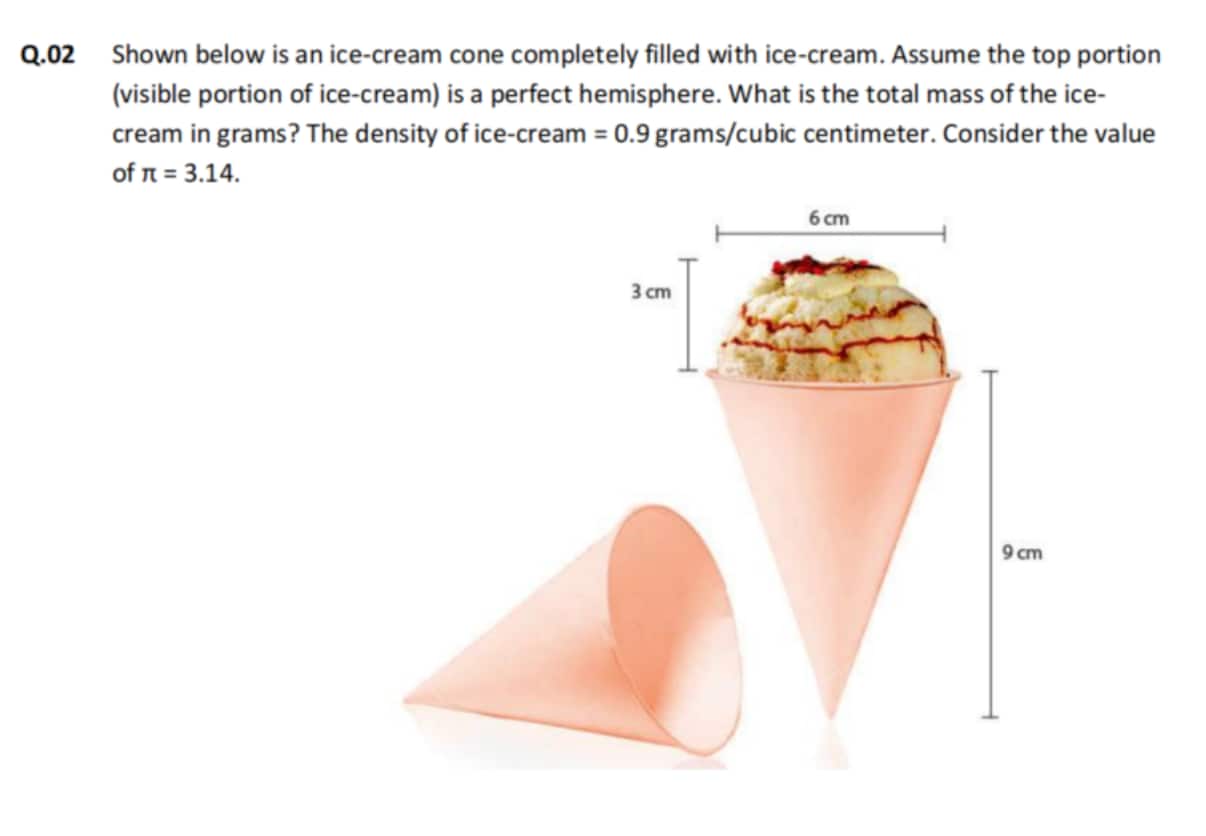
Solution: Approx 127 gm of ice cream
This is again a mensuration based question where the weight of ice cream is equivalent to volume of Ice-cream in cone+Hemisphere (as per the values given)
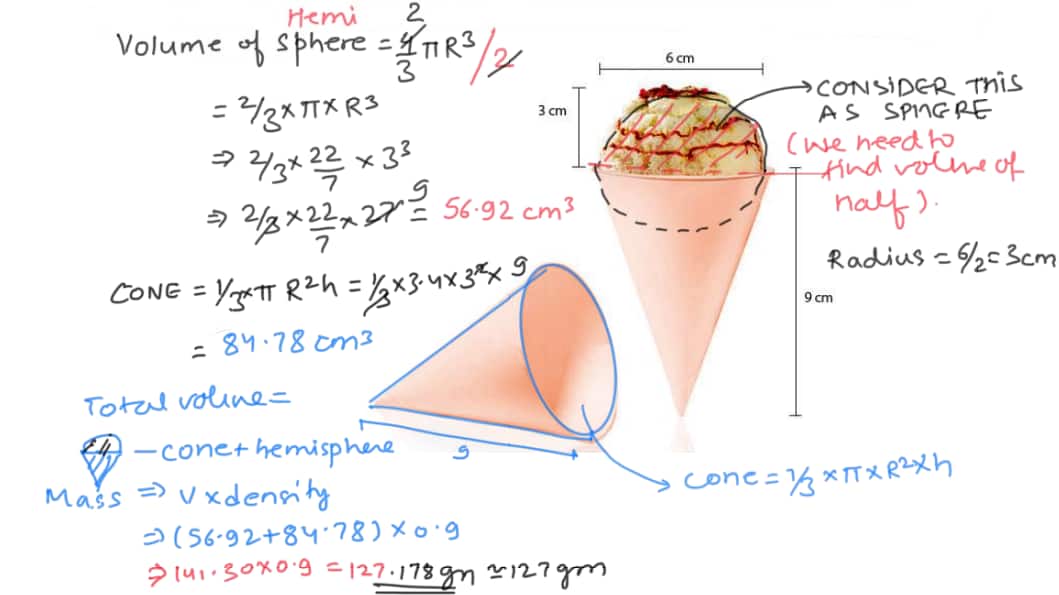
Explanation is given as follows :
MSQ (Multiple Select Questions)
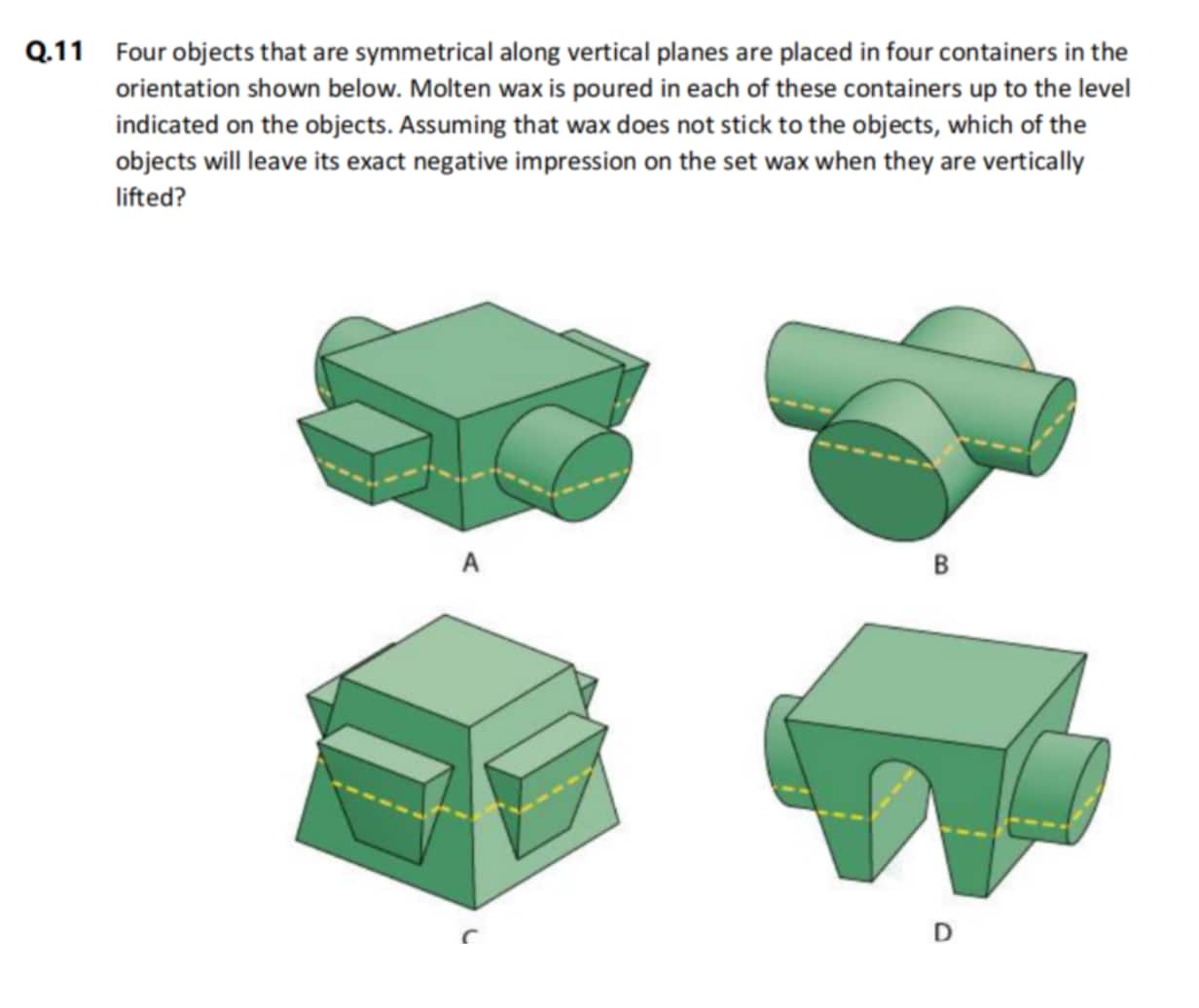
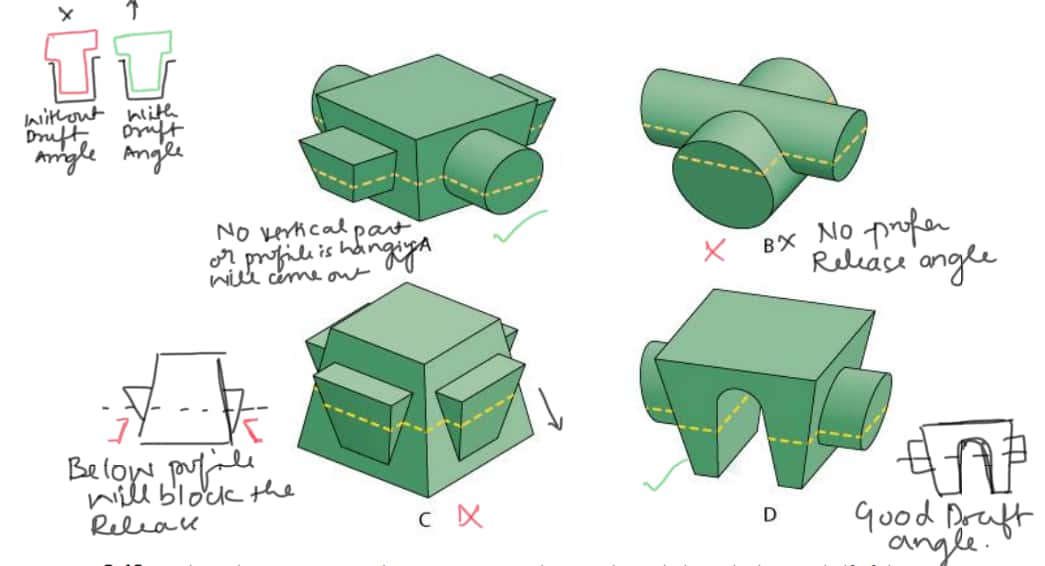
Solution : A & D
This question needs the understanding of “Draft Angles” which are fundamental in manufacturing processes like casting and molding. Only profiles with right draft angles will be released, others will remain struck.
Note : For a part to come out the following conditions are to be met:
A. No part below the wax line should be wider than the cross section at the wax-line.
B. The Vertical surfaces should not curve inward or outward to block the releasing.
MCQ: Multiple Choice Questions
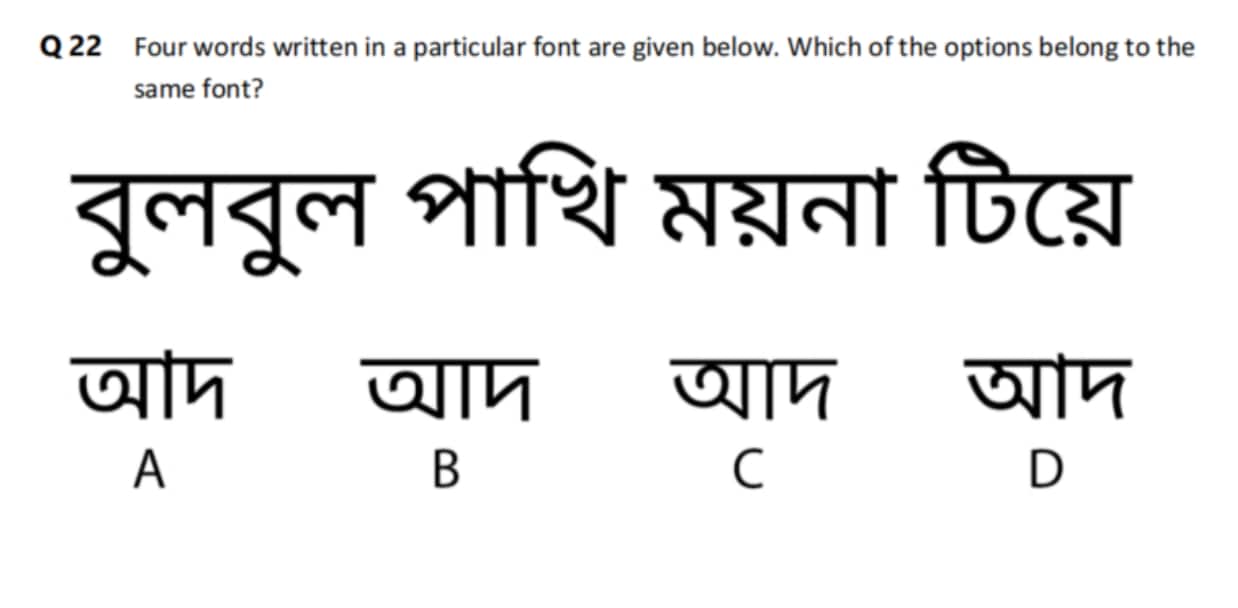
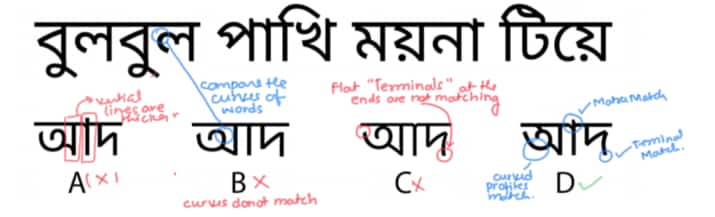
Solution : Option D
To solve such question focus on the primary elements of the “Typography” as Stroke Weight(uniformity), Terminals(Endings) and Matra (Head Lines) in the given words from the “Bangla Language”
Refer the explanation in each option as per the image attached below.
CEED 2026 - Part B
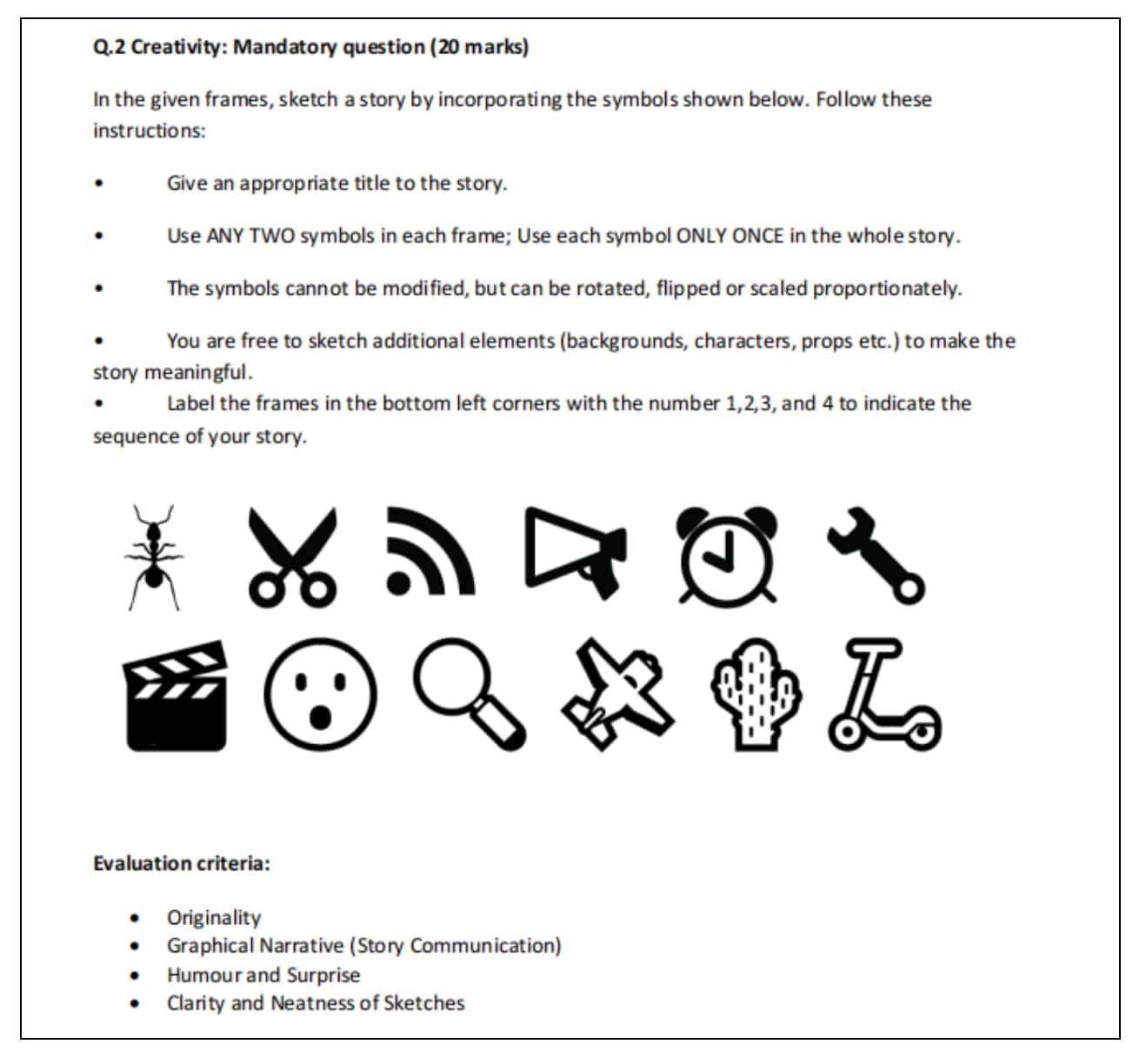
Solution : In this question we will bring the information in the form of icons to a meaningful story of a child for its learning, problem solving and evolving narrative about the world.
Title Of Story : “From Curiosity to Confidence”
Frame 01: Curious Beginning
A Curious child closely observes a tiny ant through a “magnifying glass” discovering how small details can reveal the hidden world in our surroundings.
Frame 02 : Consistent Action
As he grows he learns to balance things in life, which begins with riding a cycle avoiding day to day hurdles(cactus), understanding the lesson that it needs attention and caution.
Frame 03: Fixing the Life
With life passing the child learns to fix things as small as fixing the wheel using simple tools(wrench), realising problem-solving builds confidence.
Frame 04 : Share Achievements
Child speaks about the life and learnings clear and loud, revealing how persistence leads to accomplishment
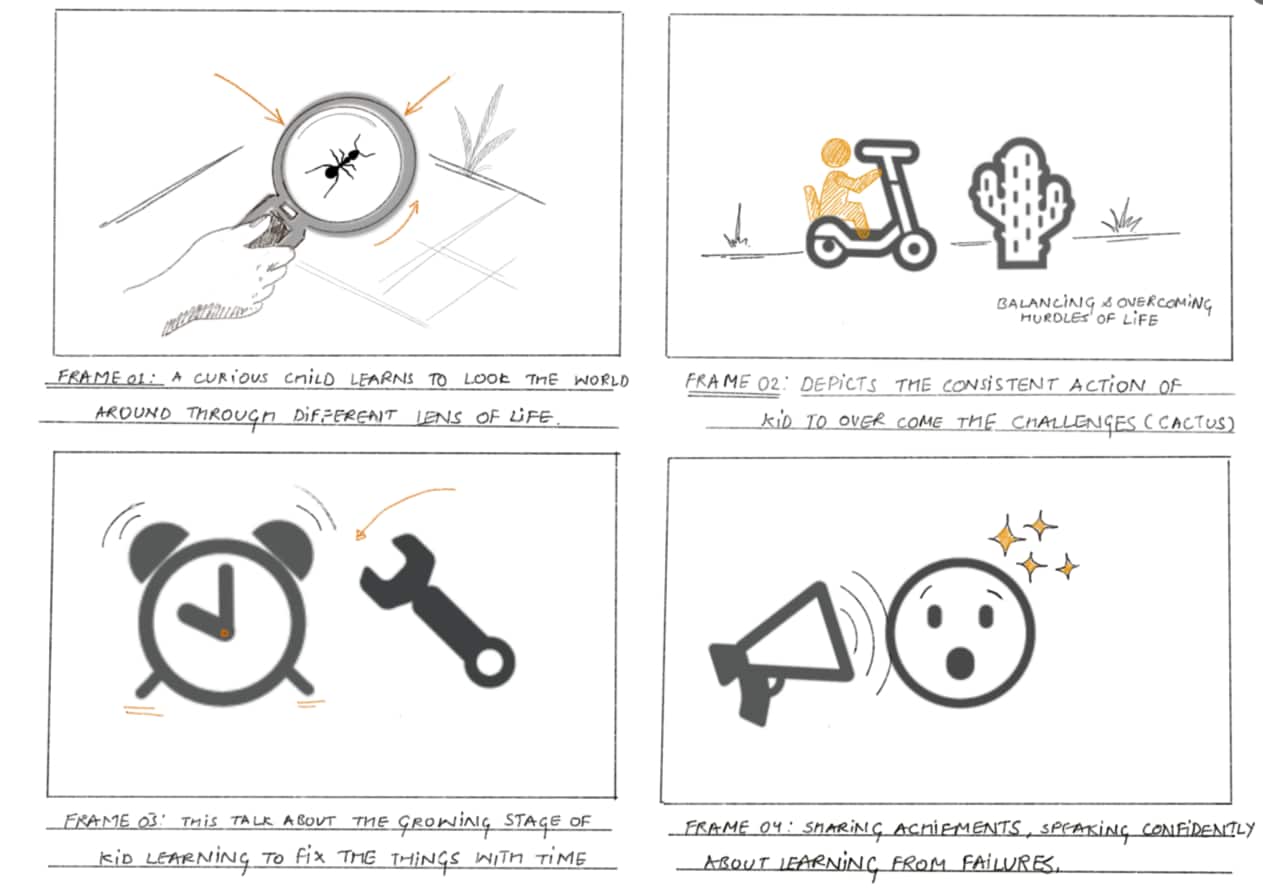
This is the story board depicting the story of a boy-child, who is learning to overcome challenges and try harder while looking at the world from a different perspective.
CEED 2026 - Detailed Exam Analysis
Students can get the overall CEED 2026 exam analysis question paper from in the table below to understand the difficulty level and questions asked from each section of the CEED 2026 exam:
Section | Difficulty Level |
Part A: Numerical Answer Type (NAT) | Moderate to High |
Part A: Multiple Select Questions (MSQ) | Moderate |
Part A: Multiple Choice Questions (MCQ) | Moderate |
Part B: Drawing Section | Moderate |
Overall | Moderate |
Students are also advise to check:
Section-Wise Analysis of CEED Question Paper 2026
Aspiring students for CEED 2027 can get the section wise analysis for the CEED 2026 question paper from below to help them understand the CEED exam better:
NAT (Numerical Aptitude Test)
This Section consisted of 21.33% weightage of the overall question paper. The section was tricky and visual-observation based. Otherwise if someone adopts the traditional calculations approach, it is practically impossible to attempt all sections.
Like question 02, whereas some questions needed some conceptual. Most questions were based on basic geometry, logic and required precision in attempting
Section- Summary
1a | Difficulty Level | Moderate (Tricky/Time-Intensive) |
1b | Ideal Time | 20-25 minutes |
1c | Good Attempt | 05-06 questions (No Negative Marking) |
1d | Focus Areas | Surface Area and Volumes, 2D/3D Geometry, Logical Interpretation of the hidden clues |
MSQ (Multiple Select Questions)
This is a tricky part of the overall assessment in the CEED 2026 examination because of the negative marking (-1), but it holds a total of 27% weightage in approximate.
The evaluation scheme for this section is very unique, offering marks ranging from 4 to (-1), making it a territory to charter with extreme caution. And a “right approach for attempting could have been not selecting the right options, but eliminating the wrong options.” This makes the section a ‘Territory to charter” with extreme caution
Section- Summary
2a | Difficulty Level | Challenging |
2b | Ideal Time | 20-22 minutes |
2c | Good Attempt | 05-06 questions |
2d | Focus Areas | Visual Patterns Symmetric Projections Material Logic Geometric Construct Mechanism and Functionality |
MCQ: Multiple Choice Questions
Unlike previous year 2025 in the past, the MCQ Section was a good composition of questions from diverse domains, holding approximately more than half of the weightage score in aggregate (52%). The theme of the questions asked were broad reading from the advanced mechanical movements like cams and gears to typography concepts.
Section- Summary
3a | Difficulty Level | Easy to Moderate |
3b | Ideal Time | 20-25 minutes |
3c | Good Attempt | 13-15 questions |
3d | Focus Areas | Typography, Drawing Concepts like Perspective Drawing, Mechanisms, Visual Puzzles |
Articles
Related Stories
|
Certifications By Top Providers
Explore Top Universities Across Globe
Popular Courses and Specializations
List of colleges accepting CEED

Browse Design Colleges by State
Questions related to CEED
On Question asked by student community
Have a question related to CEED ?
If you're starting from scratch for CEED 2027 , you have a great advantage: time. You don't need to be an expert artist to do well. CEED rewards observation, creativity, problem-solving, visual communication, and design thinking as much as drawing skills.
Here's a practical roadmap:
Step 1: Understand the Exam
Hello,
To prepare for M.des exams like CEED or NID DAT, here are some points which you can follow:
Understand the pattern – focus on creativity, design aptitude, and problem-solving.
Practice sketching daily and improve visualization.
Study basics of color, form, and design concepts.
Solve previous papers and build a
NIFT M.Des / NID / CEED – Careers360 Study Material
-
Careers360 NIFT Study Material → Guides + 10 free mock tests → Careers360 NIFT Material
-
E-books & Sample Papers → Practice questions & previous papers → Careers360 NIFT E-books
Focus Areas: Creative Aptitude, General Ability, Situation Test.
Hii
Common Entrance Examination for Design is a test includes design aptitude, your creativity, visualisation, problem-solving, and also analytical ability.
CEED exam structure is divided in 2 parts (PART A & PART B) and you can check what to study and syllabus of CEED on career360 https://design.careers360.com/articles/ceed-syllabus-2025
CEED syllabus includes:
Visualization and spatial ability
Design thinking and problem solving
Drawing skills
Creativity
Communication skills
Analytical and logical reasoning
Environmental and social awareness
Observation and design sensitivity Also includes topics on form, function, aesthetics, and technical drawing.

Applications for Admissions are open.
Ranked #45 Among Universities in India by NIRF | 1950+ Students Placed, 91% Placement, 800+ Recruiters
Creative Edge Design Exam Coaching By Toprankers
ApplyChoose Creative Edge by TopRankers for Design Test Preparation
CEED Notifications
Never miss CEED update
Get timely CEED updates directly to your inbox. Stay informed!