Indian Institute of Art and Design, New Delhi
Leading Design College | 95% Placement Record | Merit-cum-Means Scholarships for Deserving Students


Students who took the NID DAT 2026 exam can read this article to get the NID DAT 2026 Prelims (Part-B) Question paper with answers, which will help them comprehend the paper’s pattern and overall difficulty level. Future NID DAT candidates will also be able to comprehend the kinds of questions and language of the NID 2026 Prelims Part - B question paper. Read the complete article to understand the format and expert analysis of the NID 2026 exam Part-B Prelims Question paper. The National Institute of Design has officially announced the NID B.Des Prelims 2026 results on April 2nd, 2026.
This Story also Contains
NID 2026 Prelims question Paper did not have any part A paper and contained 6 creative ability based drawing questions in total.
Since NID does not publish its official question papers, students can find some memory-based NID 2026 Prelims Part-B questions and answers below according to the students who took the exam, which was held on December 21, 2025. The questions for NID 2026 prelims question paper (Part-B) are as follows:
Ques: Visual Interpretation & Story Understanding (15 Marks)
Read the following story carefully and respond to the question below:
Story: An Indian Spiritual Folktale
Long ago in India, a wealthy monk renounced his riches and wandered from village to village in search of heaven. Though learned and disciplined, he had not found true peace. One day, he met a simple-looking boy on a village road. When the boy asked where he was going, the monk replied that he was going to heaven. Half in jest, the monk told the boy,
“Stand on this spot without moving, eating, or speaking. If you do this for twelve years, you will reach heaven.”
Believing the boy would soon give up, the monk left. The boy obeyed without question. Seasons passed, people mocked him, and his body weakened, but his faith remained firm. After twelve years, the monk returned and found the boy still standing—calm and radiant. Suddenly, the boy began ascending toward heaven. Realizing the power of pure faith, the monk held the boy’s hand and was lifted along, understanding that true salvation comes from complete belief and surrender, not knowledge alone.
Task:
Ans:
1st Frame: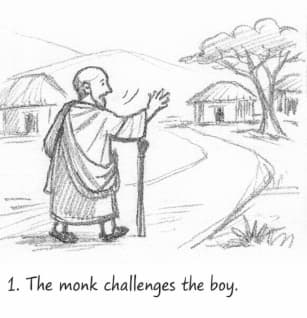
20-word explanation:
A learned monk casually challenges a simple village boy to stand still for twelve years to reach heaven.
2nd Frame:
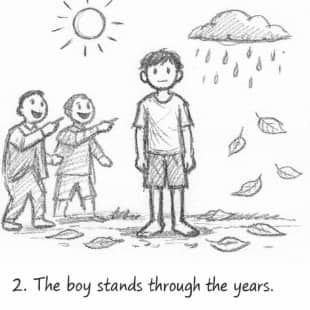
20-word explanation:
Time passes as seasons change, people mock him, yet the boy remains unmoving, weakened physically but strong in faith.
3rd Frame:
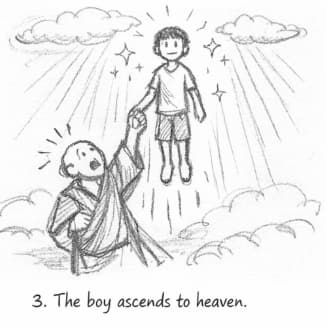
20-word explanation:
The faithful boy ascends to heaven, lifting the monk along, revealing that true salvation comes from belief, surrender, and devotion.
Approach:
Ques : Object Reinterpretation & Creative Thinking. (15 Marks)
An object made of plastic, similar to a spectacle frame, has one temple bent in the opposite direction.
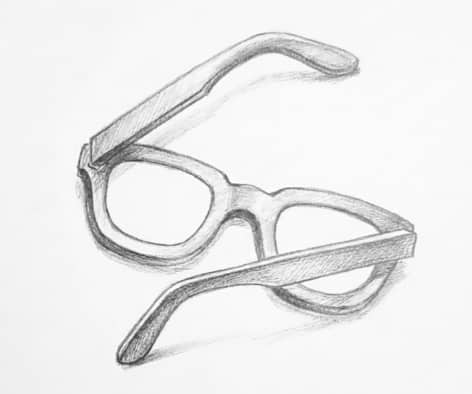
Task:
Scholars’ Round Deadline: 14th Nov’26 | Earn upto 50% merit Scholarship + 10% for top performers | EFMD Accredited | AACSB (USA) & AMDISA Member | Highest CTC 28 LPA
Faculty from A+ Design schools of India and Abroad | 100% Placement Assistance
Ans:
Use 1: Portable Phone Stand
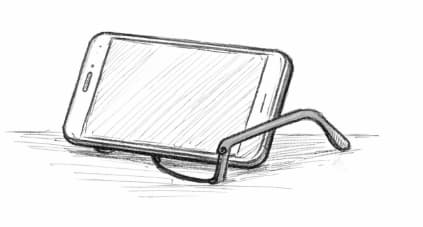
Bent temple supports phone upright, while frame rests on surface, becoming lightweight portable stand for hands-free viewing anywhere indoors outdoors.
Use 2: Face Mask Holder
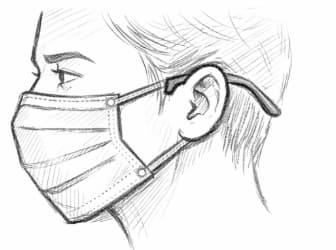
Oppositely bent temple hooks behind the ear, frame balances weight, allowing object to function as hygienic face-mask holder during travel commutes.
Use 3: Tabletop Bag Hanger
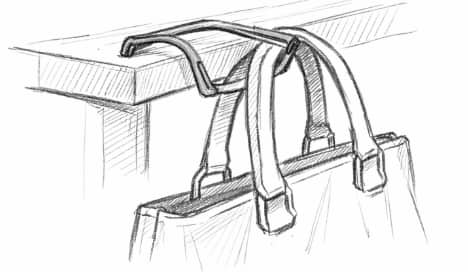
Frame hangs on table edge, reversed temple grips bag handles, preventing contact with floor in public places such as cafes.
Approach:
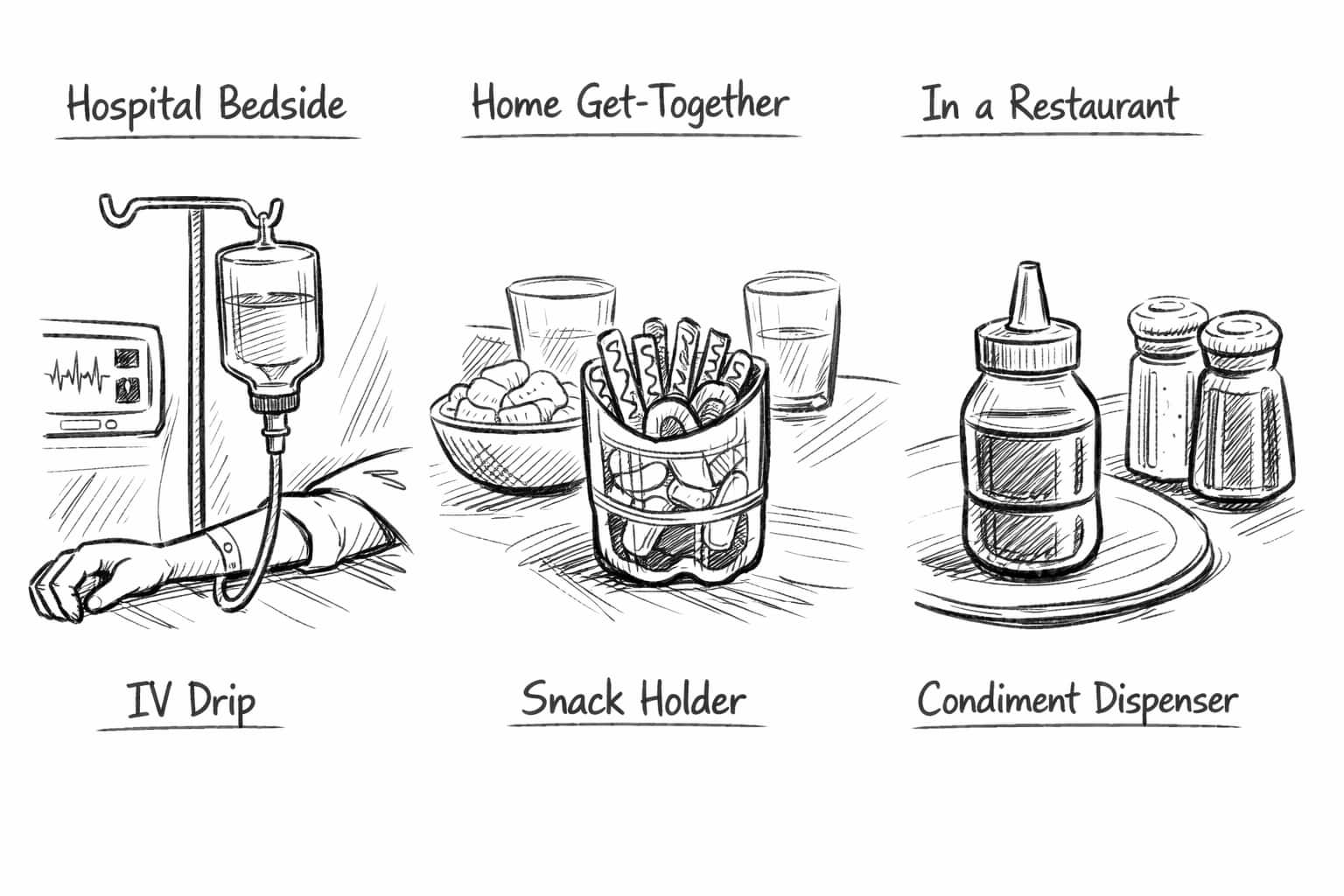
Ques 3: A small plastic bottle is give, students had to make 3 different uses according to the place:
Hospital bedside
Home at the time of get together
In a restaurant
Ans:
Approach:
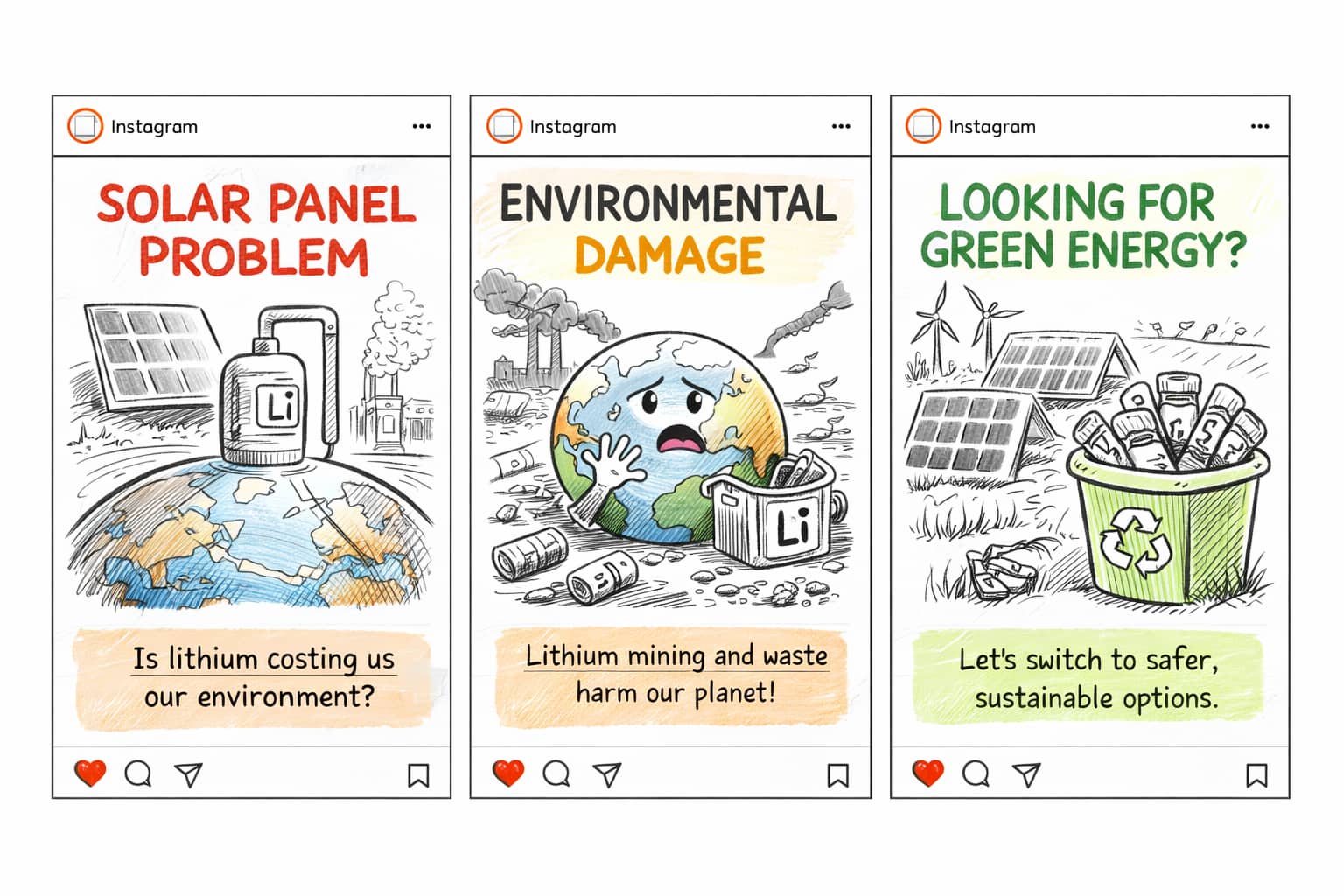
Ques 4: Solar panel with lithium use paragraph was given with information like bad for the environment etc. Similarly 3 situations were given from which students have to pick and create:
3 Instagram posts
Write up
Sketches
Ans:
Approach:
Define the objective
Plan 3 Instagram posts as a series
Write short, clear captions
Create simple sketches
Ques : Metaphor Creation & Visual Expression. (20 Marks)
A hand combined with another object creates a metaphorical meaning
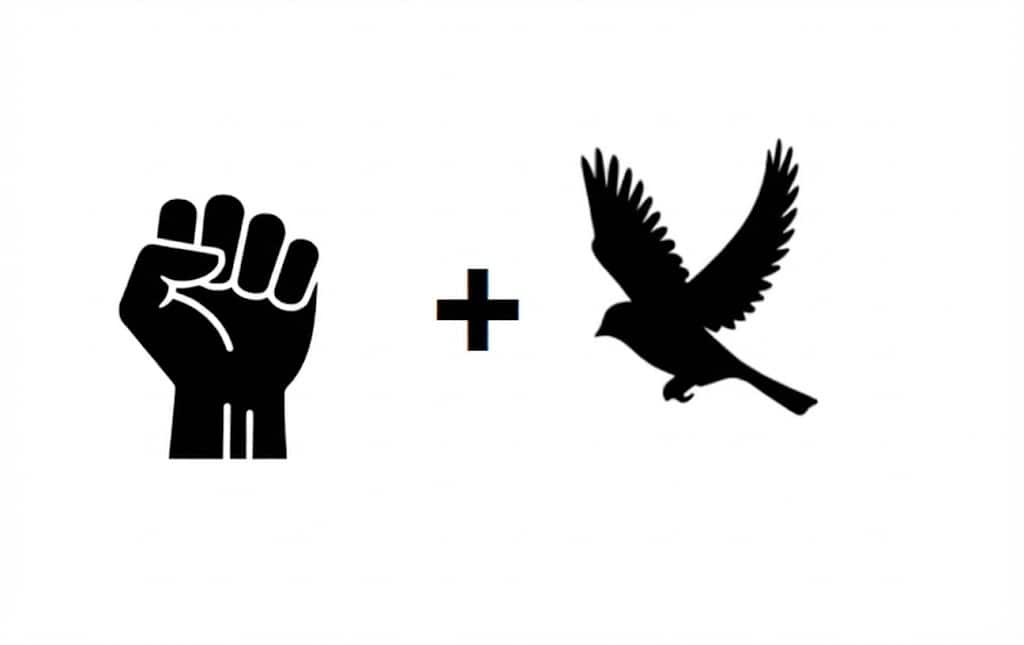
Task: Choose one object from the list below and combine it with a hand
Create a title for your metaphor : Write a 50-word explanation describing the metaphorical meaning (5 Marks)
Illustrate the concept in one visual frame. (15 Marks)
Ans: Metaphor Title: Tied by Choice
50-word Explanation (Refined for Evaluation) :
A hand tightly bound by rope represents self-imposed limitations shaped by fear, habit, and societal expectations. Though the rope appears external, the metaphor suggests responsibility lies within. It highlights how humans often restrict their own freedom, and that true release begins with awareness and conscious decision-making.
Illustration:

Ques : Safety & Problem Solving (15 Marks)
A bus driver applies sudden brakes, and the bus is full of children.
Task:
Ans:

1. Padded modular interior panels:
Soft, impact-absorbing wall and seat-back panels reduce injury by cushioning children when sudden braking causes forward or sideways movement.
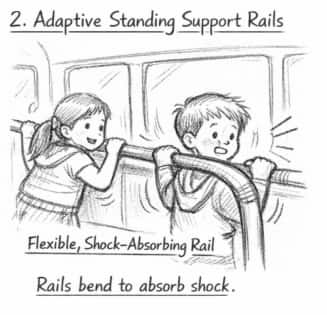
2. Adaptive standing support rails
Flexible, shock-absorbing handrails bend slightly during sudden stops, reducing force impact on children holding or colliding with them.
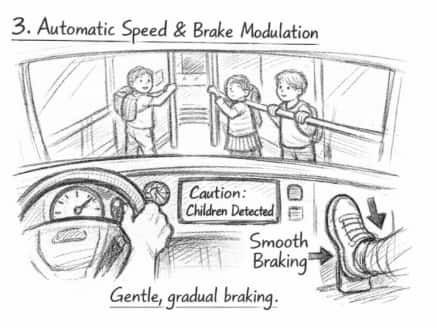
3. Automatic speed and brake modulation system
Smart braking systems limit sudden deceleration when children are detected, ensuring gradual stopping and reducing chances of imbalance and injury.
Related Articles students may also check:
As per the NID DAT 2026 Exam Pattern,
As per the revised selection process , the NID 2026 prelims exam will be a qualifying exam to shortlist candidates for the mains exam.
Students can see the overall difficulty level of the NID Exam 2026 Question Paper Part - B Question Paper section wise by checking out the table below:
Parameter | Details |
Total Main Questions | 6 questions |
Sub-parts | 2–3 sub-parts in most questions |
Total Drawing Tasks | Around 14 |
Time Duration | 3 Hours |
Difficulty Level | Moderately Difficult |
Question Type | Drawing + Writing |
Major Focus Area | Problem Identification & Solution |
Time Management | Difficult due to lengthy answers |
Topic & Skill Focus Areas | |
Area | Observation |
Drawing Skills | Required but not decorative |
Design Thinking | High Importance |
Problem Identification | Major Focus |
Idea Explanation | Through sketches + written answers |
Creativity | Tested via real-life problems |
Technology Integration | AI and futuristic themes included |
Student Feedback | Key Points |
Pattern Change | Only CAT section asked, no Part A |
Quant Section | Not included, disappointed many students |
Paper Length | Questions were lengthy |
Sketching Time | Not enough time for detailing |
Overall Feeling | Moderate but time-consuming |
Frequently Asked Questions (FAQs)
NID 2026 did not have any Part-A section and questions were only based on creative ability with moderate level difficulty.
Questions were based majorly on problem identification.
Solutions were lengthy with writing and sketching parts causing difficulty in time management for a lot of students.

On Question asked by student community
Dear Student,
For NID DAT exam preparation, you can follow the preparation tips provided by Careers360. The article covers important aspects such as understanding the exam pattern and syllabus, choosing the right study material, practising previous-year papers, and taking mock tests.
Use these strategies
Hello Student,
To start your NID DAT and UCEED preparation, begin with the syllabus, exam pattern, and previous years' question papers. You can also refer to the Careers360 preparation resources and sample papers for regular practice using the links provided below.
No, the NID DAT Prelims paper is not exactly the same for B.Des and M.Des aspirants.
You can check these resources for more clarity:
https://design.careers360.com/articles/nid-dat-sample-papers
https://design.careers360.com/articles/nid-mdes-previous-year-question-papers-with-solution
Hello Dear Student,
Could you provide more information so that i could help you further
No specific stream is required in Class 11 for BDes admissions. You can join B.Des (Bachelor of Design) with any stream in Class 11th (Science, Commerce, or Arts/Humanities). Top design institutes like NID ( NID DAT scores) and NIFT ( NIFT Entrance Exam ), as well as IITs (via UCEED),

Leading Design College | 95% Placement Record | Merit-cum-Means Scholarships for Deserving Students
Ranked #45 amongst Universities in India by NIRF | Get Upto 100% Scholarships | Spot Admissions via CUET
Scholars’ Round Deadline: 14th Nov’26 | Earn upto 50% merit Scholarship + 10% for top performers | EFMD Accredited | AACSB (USA) & AMDISA Member | Highest CTC 28 LPA
Faculty from A+ Design schools of India and Abroad | 100% Placement Assistance
Application form FREE of Cost for a Limited Period of Time | #11 by NIRF | NAAC A++ Accredited Institution | 1100+ Recruiters
B.Tech Admissions Open 2026 | #2nd in India by The World University Rankings for Innovation | 200+ Collaborations | 700+ Industry Recruiters