
Search Colleges, Exams, Schools & more


Login
NID Studio Test Previous Year Questions and solutions
Hi there, candidates! The second step in the NID admissions process for the B.Des. and M.Des. programs is the NID Studio exam. It is an assessment of the practical NID 2027 Exam intended to examine a candidate's innovation sand creative skills, proficiency with materials, and capacity for frugal problem-solving ability. This set of tasks in the NID Studio test preparation may include model-making, sketching, doodling, and visual storytelling as the components.
This Story also Contains
- Significance of NID Studio Test 2027
- NID Studio Test Last Five Years Trends
- How to Solve NID Studio Test 2027 - Questions Effectively
- Expected Questions from Topics NID Studio Test 2027
- NID Studio Test Previous Year Questions (2021-2025)
Significance of NID Studio Test 2027
As per the NID DAT Exam Pattern, NID DAT prelims will be a qualifying test and does not carry any marks for final evaluation. Therefore, the final verdict on the admissions will be based on the NID Studio Test and Interview.
NID Studio test 2027 will be a paper-and-pencil/pen test as per the exam pattern which will be of total 100 marks which is most likely to include drawing, sketching, model making or group activities. NID entrance exam 2027 will be conducted in English language. Student’s logical, observation skills, problem solving and creative skills will be tested in this section.
NID Studio Test Last Five Years Trends
Students can go through and check key trends for NID Studio Test in last 5 years for students to understand:
- Focus has been seen more on the design thinking capabilities of students drawing quality in the creative section. Clear ideas matter more than neat or realistic sketches.
- Questions have seen to be more user centric. students must design keeping a specific user in mind (elderly, disabled, etc.).
- Models should not just look creative but also be stable and usable. Structure, balance, and practicality are evaluated.
- Questions based on real-life situations with more focus on innovation and design thinking ability for students.
- Examiners in the NID Studio Test evaluate student’s imagination, observation, and narrative skills. Students may get videos/audio and need to interpret or build stories.
- Time management has been a crucial element as multiple tasks in limited time have been seen in NID Studio Test over the years.
- NID Studio Test is not based on any fixed pattern as each year introduces new materials and new task formats
How to Solve NID Studio Test 2027 - Questions Effectively
- Students are needed to work on their Observation, creative and memory skills for the NID Studio Test and Sketching section as it is examined carefully by the examiners in NID.
- Students can practice and master observational skills by sketching everyday objects/scenarios from memory and to prepare for (Sketching & Visualisation & Doodling and Rapid sketching) section for NID studio Test.
- To prepare for the Model Making and Material Handling Section for NID Studio Test 2027, getting familiarity between material and yourself is very important. Spending as it will help students to perform fast with accuracy in the exam.
- Students can practice using clean lines, proper proportions, and presentation with minimal details. It is also important to practice human figures, daily objects, and everyday basic scenes. Try practicing within short time constraints like 1-2 minutes.
- As NID Studio Test focuses on concept thinking and innovation, daily practice with Important topics to study for NID Studio Test will generate new ideas and make students fast in thinking of a design solution during the actual exam.
NID DAT Exam Pattern 2027
Master the NID DAT exam with this free eBook! Learn the latest exam pattern, marking scheme, question types and section-wise weightage to boost your preparation.
Download NowExpected Questions from Topics NID Studio Test 2027
The questions are mostly expected to be asked from the following domain areas as discussed, also we would be providing you with the sample questions and solutions for the same in this article. The specific task types that appear in the test include the following.
Model Making and Material Handling: From the given materials (real models and if possible functional)
Observation Based Drawing : (Camouflage of the objects in a black blag and students need to identify the object without touching).
Audio Visuals : (Questions based on 3-5 minute video clips testing observation skills)
Sketching & Visualisation & Doodling Based Exercises : (Evaluating your Visual narration)
Related Articles:
NID Studio Test Previous Year Questions (2021-2025)
Students can get NID Studio Test Previous Year questions from below to help them understand exam pattern and language of the questions in order to prepare better:
Ques: NID Studio Test : 2024 M. Des. Question
You have to imagine a hypothetical scenario where space travel is commercially advertised. There is a guideline for the passengers listing things they shouldn't carry like pets, crystal balls(which predicts the future), exotic flora or fauna and karaoke. You are required to list 4 more things that one cannot take to space in a journey and make an informative poster based on this information, which can be displayed digitally on peoples devices like phones.
Solution: This question requires a blend of ‘Logical Thinking’+ User Centric Approach without neglecting all the stakeholders of the ‘hypothetical scenario’
Step 01 : Brainstorming the “Why”
Why would certain things be banned in space as per the given scenario ?
Safety : Avoiding any hazard
Environment : Recycled air and Microgravity
Social Harmony : Empathise in journey with other and mental peace for everyone
Physics : Zero Gravity space may fly the objects
Suggested 04 Prohibited Items could be
High-Power Magnets or Appliance : To avoid any disruption or interference with Electromagnetic Shielding and navigation instruments.
Loose Powdery Objects : To avoid any accidental inhaling in the microgravity spaces.
Sand Timers : Since this is again a gravity based instrument so would become useless in the zero-G space.
Fermented Foods: To avoid any strong smell in the entire journey for a reason the system is a closed loop.
Visual Illustration of the poster depicting the message and the “prohibited” items in the space.
Ques: Using clay and metal wire (MS Wire 3mm), make a stand to hold the mobile and facilitate charging in the docked position. Explain your idea in the space below.
B. Sensory & Psychological Evaluation-based Questions
This is a crucial evaluation of the reflection skills of an aspirant, where a student is required to reflect on the following exercises:
B1. Audio-Video Based Exercise :
It is designed to evaluate a candidate and auditory and visual stimuli by absorbing the details and translating them into more creative and impactful outcomes.
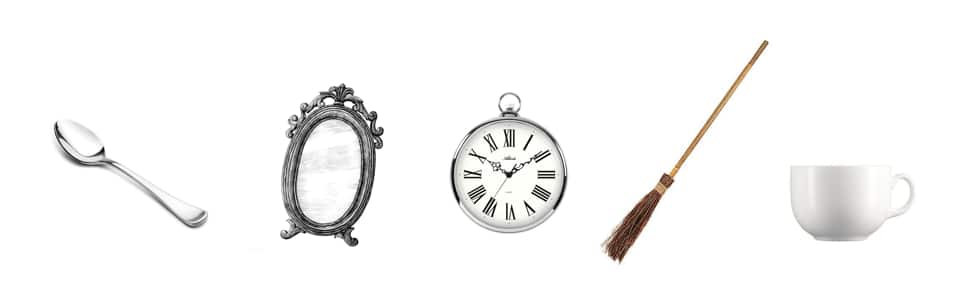
B2. Picture and Visualisation-Based Exercise
An aspirant is shown a series of pictures, short clips, or sounds that need to be interpreted by remembering the chronology/random order and transforming them into stories.
Sample Question: For a given set of 05 random pictures(to be shown visually over projector only), the students may be asked to remember the visual information(Series of Pictures) in the chronology, and the aspirant is required to make a story in the given space in 150 words, providing a suitable title.
C. Doodling-Based Questions
Let’s first try to understand what doodling is.
Doodling is not about adorable and perfectly drawn ideas; it’s instead a little casual approach where the primary objective is to put the idea first, conveying the thought to a layman through the quick doodles without much compromising with the proportions.
Sample Question: Draw the object from the following two points of View.
Bird’s View
Ant View
Fish View
Human view
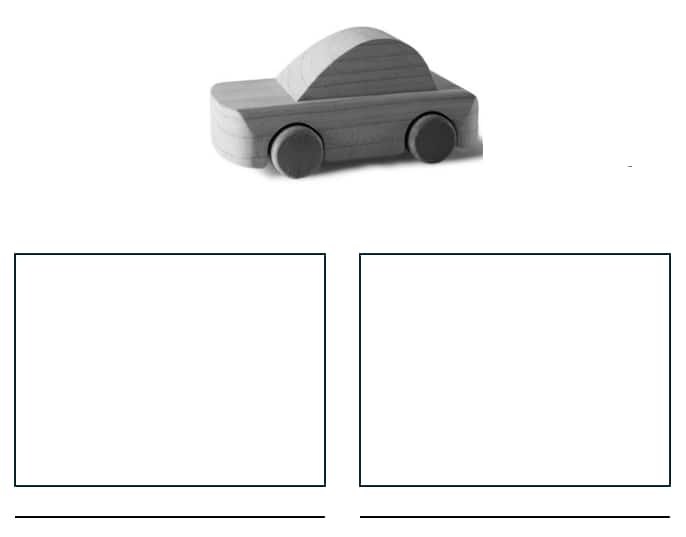
Note: This is a technical question in the context of drawing/doodling abilities, where the objective is to test not only the drawing skills but also the understanding of distorting the views in proportions.
Ques: Theme : Design Solution for Elderly Care
Q1a: Design Brief
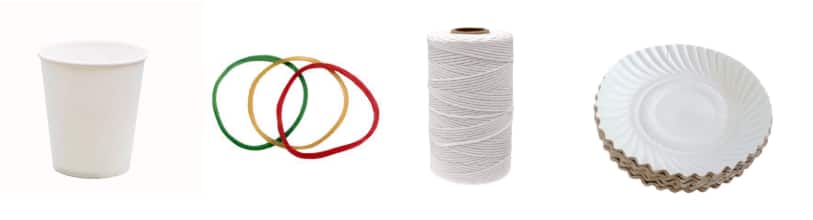
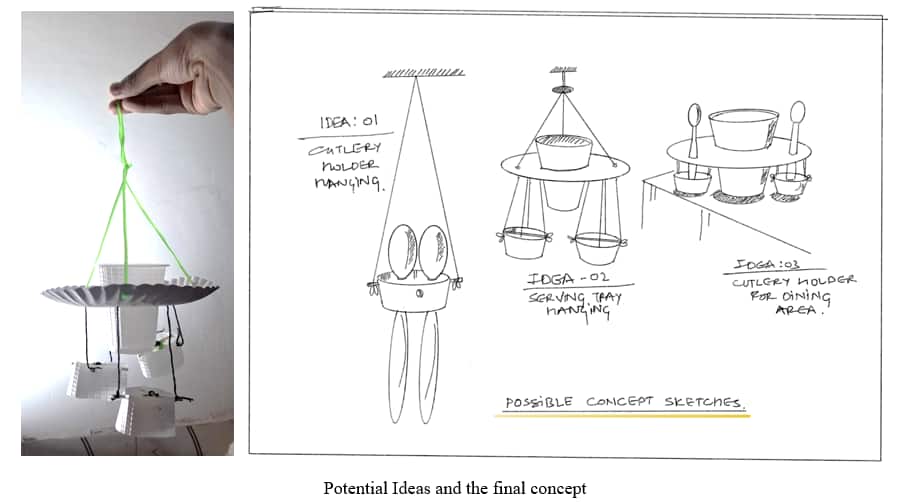
Design a portable utensil holder that makes it easier for elderly people with weak grip to carry essentials like spoons, forks, and napkins from the kitchen to the dining area at a time, it could act like an organiser to carry.
Materials Provided
8 paper cups
5 rubber bands
10 matchsticks
1 metre cotton string
1 paper plate
Instructions:
Use only the materials provided.
Focus on ease of grip, portability, and stability.
Sketch your final model.
Mention how each material was used and justify its role.
Explain your concept in the space given below with a possible solution:
Solution Description & Idea :
Description: In this utensil holder design created explicitly for elderly individuals, I focused on ensuring an easy and comfortable grip. The materials used include one paper plate, eight matchsticks, cotton thread, and five rubber bands. The design features three hanging slots where spoons and forks can be conveniently placed and a central glass positioned on the plate for holding napkins.
The utensil holder can also be placed on the dining table and function as a table organiser, thanks to the spoon-sized holes in the plate. Its lightweight and compact structure make it highly portable and user-friendly for elderly people.
Ques: Identify the object with the most rigid material used in manufacturing.Answer:
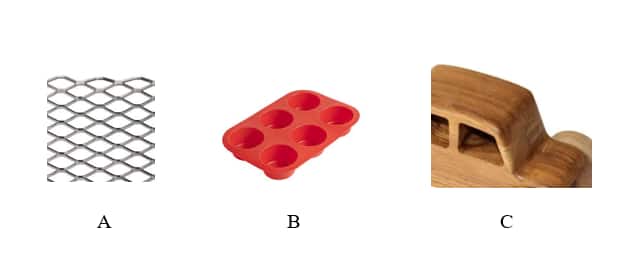
Answer: A (Aluminium Mesh)
Aluminium as a metal is a significant material for making the mesh and other construction, model making and other important day-to-day use.
Ques: Design a bracelet inspired for any of the given themes provided below.
A) Mythology
B) Nature
C) Space
Materials Provided
A4 - Copier Sheet ( 1 No.)
A4- Sheet Coloured (1 No.)
Copper Wire (50 cm)
Toothpicks (5 no.)
Explain your concept in the space given below with possible solution:
Solution: Mythological- Character-Based Bracelet
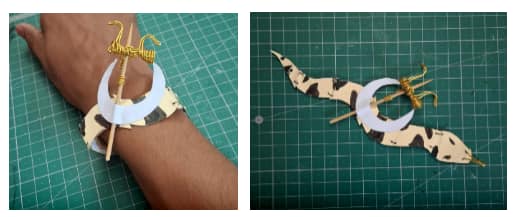
Explanation : Here is the bracelet inspired from mythology. There is no sense for moon, trishul and sneak separately in mythology, but if we combine these three ,it makes sense. It depicts lord Shiva . He has a snake around his neck,trishul in hand and moon on head. Hanging damroo gives surety to the thought of Shiva . Here in this bracelet I used ivory sheet,wire , coloured papers, thread , toothpick, and ice cream stick. The tongue sneak works as a hook and it is made up of wire.This is how its bracelet is inspired from mythology.
Theme: From Chaos to Clarity
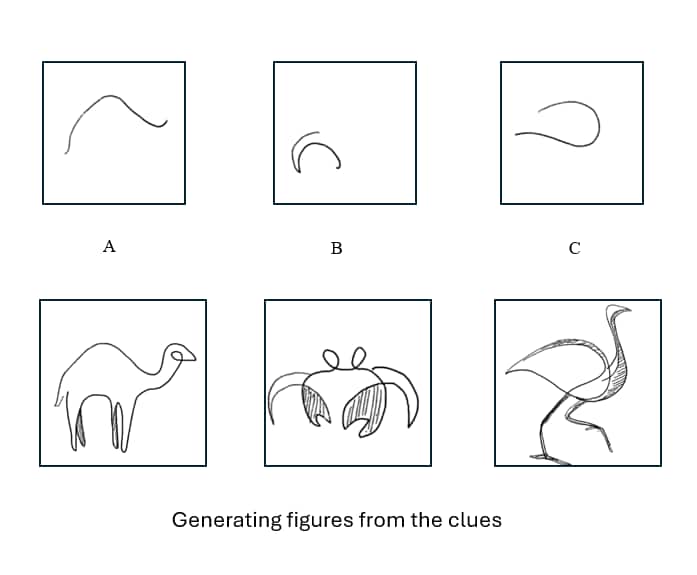
Ques: You are given three abstract scribbles. Transform each into a meaningful object or scene that promotes positivity or harmony (e.g., peace, sustainability, wellness).
Instructions:
Do not erase the original scribble.
Add minimal elements to complete the visual.
Label your drawing with a suitable title.
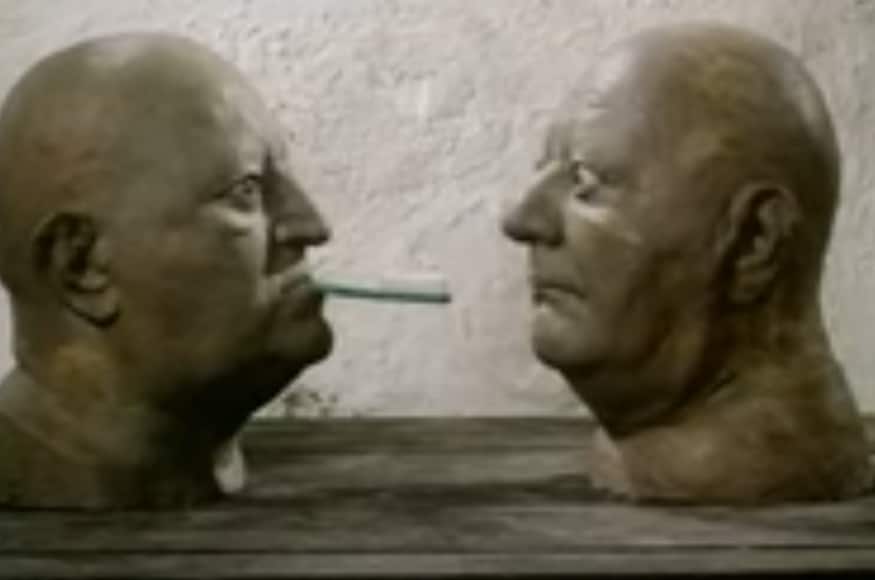
Ques: For the given video, narrate your understanding in no more than 150 words. Provide an appropriate title for the same.
Time : 20 min M.M. : 20 Marks
Space for Description :
Solution: A suitable Title could be “Beyond Words”
In the video, the series of actions like — grabbing, snatching, folding — speaks louder than words. The simple act of eating or passing items becomes a tense, silent argument. Everyday objects, like dinner plates and tools, represent control, conflict, and misunderstanding in human relationships. Through stop-motion animation, the video highlights how emotions like anger, dominance, or cooperation can be communicated through gestures and movements alone. The crux is: conversations are not always verbal — sometimes, actions, surroundings, and body language say much more than spoken words.
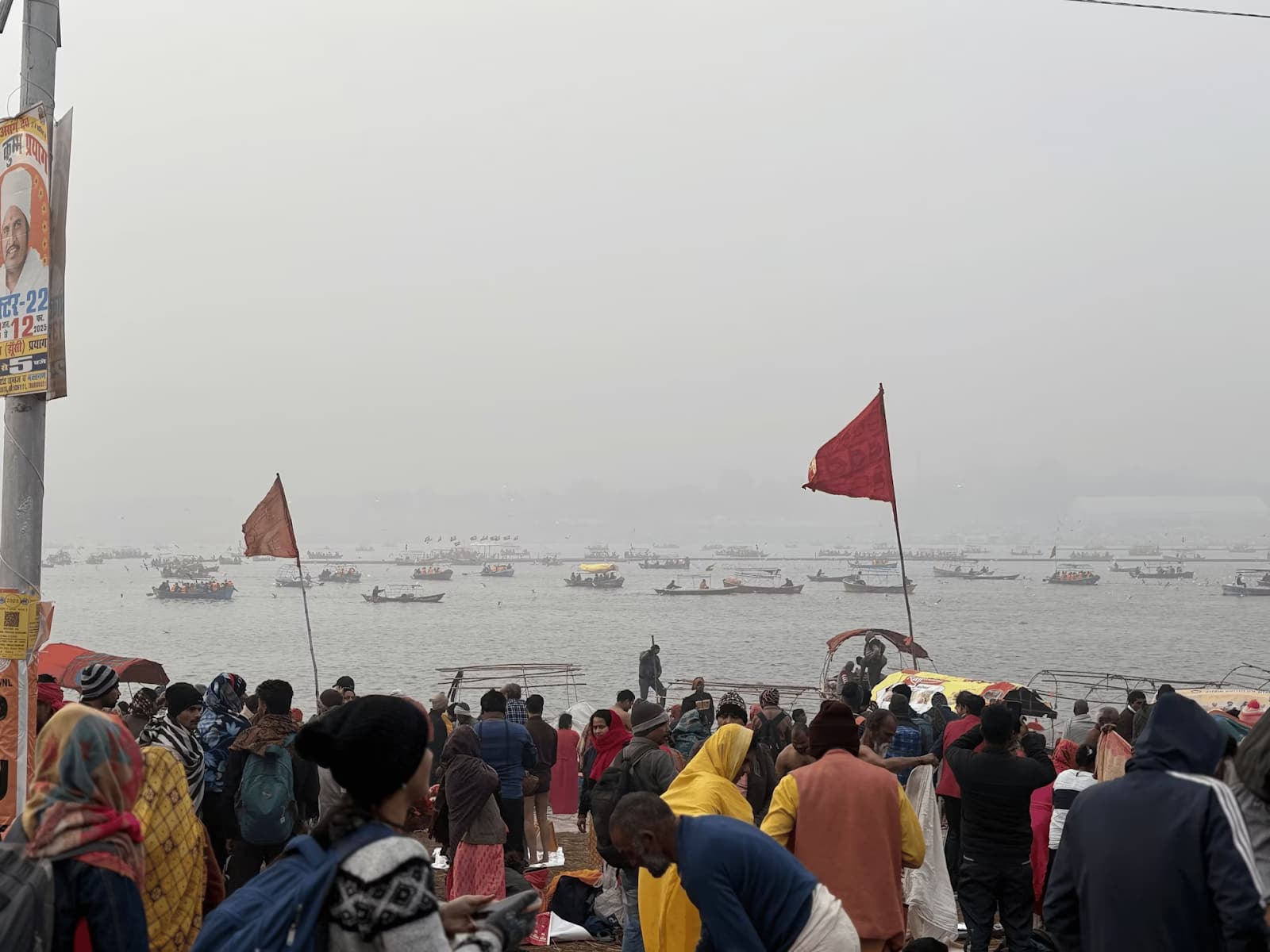
Ques: A recent large-scale event, the Mahakumbh Mela in Prayagraj, witnessed a massive gathering of people. Such large congregations come with potential risks like stampedes, missing individuals, drowning incidents, theft, and other safety hazards.
Brief: You are responsible for proposing design Solutions to minimise and prevent any two major risks associated with the event.
Instructions:
Carefully observe the provided image, which shows the crowd and environment.
Identify two potential safety risks you want to address (e.g., stampede, missing persons, drowning, theft, etc.).
Sketch your proposed design solutions. Explain each sketch with a brief explanation (50–80 words) describing how your solution would function to enhance safety in the given space.
Time : 20 min M.M. : 20 Marks
Answer: Space for Solutions proposed
Related Articles:
Articles
Related Stories
|
Upcoming Design Exams

Certifications By Top Providers
Explore Top Universities Across Globe
Popular Courses and Specializations
Popular Degrees
Popular Branches
List of colleges accepting NID DAT
Browse Design Colleges by State
Questions related to NID DAT
On Question asked by student community
Have a question related to NID DAT ?
Dear Student,
For NID DAT exam preparation, you can follow the preparation tips provided by Careers360. The article covers important aspects such as understanding the exam pattern and syllabus, choosing the right study material, practising previous-year papers, and taking mock tests.
Use these strategies
Hello Student,
To start your NID DAT and UCEED preparation, begin with the syllabus, exam pattern, and previous years' question papers. You can also refer to the Careers360 preparation resources and sample papers for regular practice using the links provided below.
No, the NID DAT Prelims paper is not exactly the same for B.Des and M.Des aspirants.
You can check these resources for more clarity:
https://design.careers360.com/articles/nid-dat-sample-papers
https://design.careers360.com/articles/nid-mdes-previous-year-question-papers-with-solution
Hello Dear Student,
Could you provide more information so that i could help you further
No specific stream is required in Class 11 for BDes admissions. You can join B.Des (Bachelor of Design) with any stream in Class 11th (Science, Commerce, or Arts/Humanities). Top design institutes like NID ( NID DAT scores) and NIFT ( NIFT Entrance Exam ), as well as IITs (via UCEED),

Applications for Admissions are open.
Faculty from A+ Design schools of India and Abroad | 100% Placement Assistance
IIAD Admissions 2027
ApplyLeading Design College | Highest CTC: ₹12 LPA | Average CTC: ₹7.5 LPA | Scholarships for Deserving Students
UPES B.Des Admissions 2027
ApplyRanked #45 amongst Universities in India by NIRF | Get Upto 100% Scholarships | Spot Admissions via CUET
Woxsen University Design Admissions 2027
ApplyOutlook I-Care Top 25 Private Fashion Design Institutes 2026: All India Rank #3 | Highest CTC 10 LPA
SRM University Ramapuram B.Des Admissions 2026
ApplyApplication form FREE of Cost for a Limited Period of Time | #11 by NIRF | NAAC A++ Accredited Institution | 1100+ Recruiters
Creative Edge Design Exam Coaching By Toprankers
ApplyChoose Creative Edge by TopRankers for Design Test Preparation
NID DAT Notifications
Never miss NID DAT update
Get timely NID DAT updates directly to your inbox. Stay informed!